
Open standards for app interoperability
What is FDC3?
FDC3 and FINOS
FDC3 (Financial Desktop Connectivity and Collaboration Consortium) is an open standard that defines how financial applications share context and trigger actions. By giving apps a common language, it enables seamless interoperability and connected workflows across desktop and web environments.
FDC3 is developed and maintained by the open-source community at FINOS. Today, it is supported by 100+ member organizations—including global banks, asset managers, and technology providers—collaborating to define how applications interoperate across financial workflows. interop.io is proud to be a founding contributor to the standard since 2017.

The FDC3 community includes 100+ members, from platform providers to application vendors and buy- and sell-side firms. interop.io is an FDC3 champion and lead-maintainer. Together, we’re paving the future of interop across the financial desktop.
Engineers and Platform Builders
Out-of-the-box interoperability between FDC3-enabled apps—no custom integrations required.
End Users
Seamless workflows across applications with shared context and no manual switching.
Where io.Connect Fits
FDC3 defines the standard. io.Connect provides the foundation to make it work in production.
FDC3 2.0 is the first major revision to the standard since its original release. The recent additions help FDC3 adopters tackle new use-cases and improve on existing ones. With FDC3 2.0:
- FDC3 has evolved from context sharing and intents to supporting complex workflows with transactions and feeds
- New intents (actions) and context definitions support real-world workflows
- The new app directory standard enables vendors and firms to publish their apps to run on any desktop agent
- 2.0 includes a new and improved standards portal website
As a vendor in capital markets, interoperability is most likely top of mind as FINOS/FDC3 is supported by the biggest buy- and sell-side firms in the industry, along with leading solutions providers around the world.
In any multi-step workflow, there are actions and responses to actions. These actions are composed of data context and intents—the core of FDC3. An easy way to think about context is “nouns” such as ticker symbol. Intents can be thought of as an action, such as open a chart. In this post, we’ll break down two key specifications of FDC3 to give them a closer look.
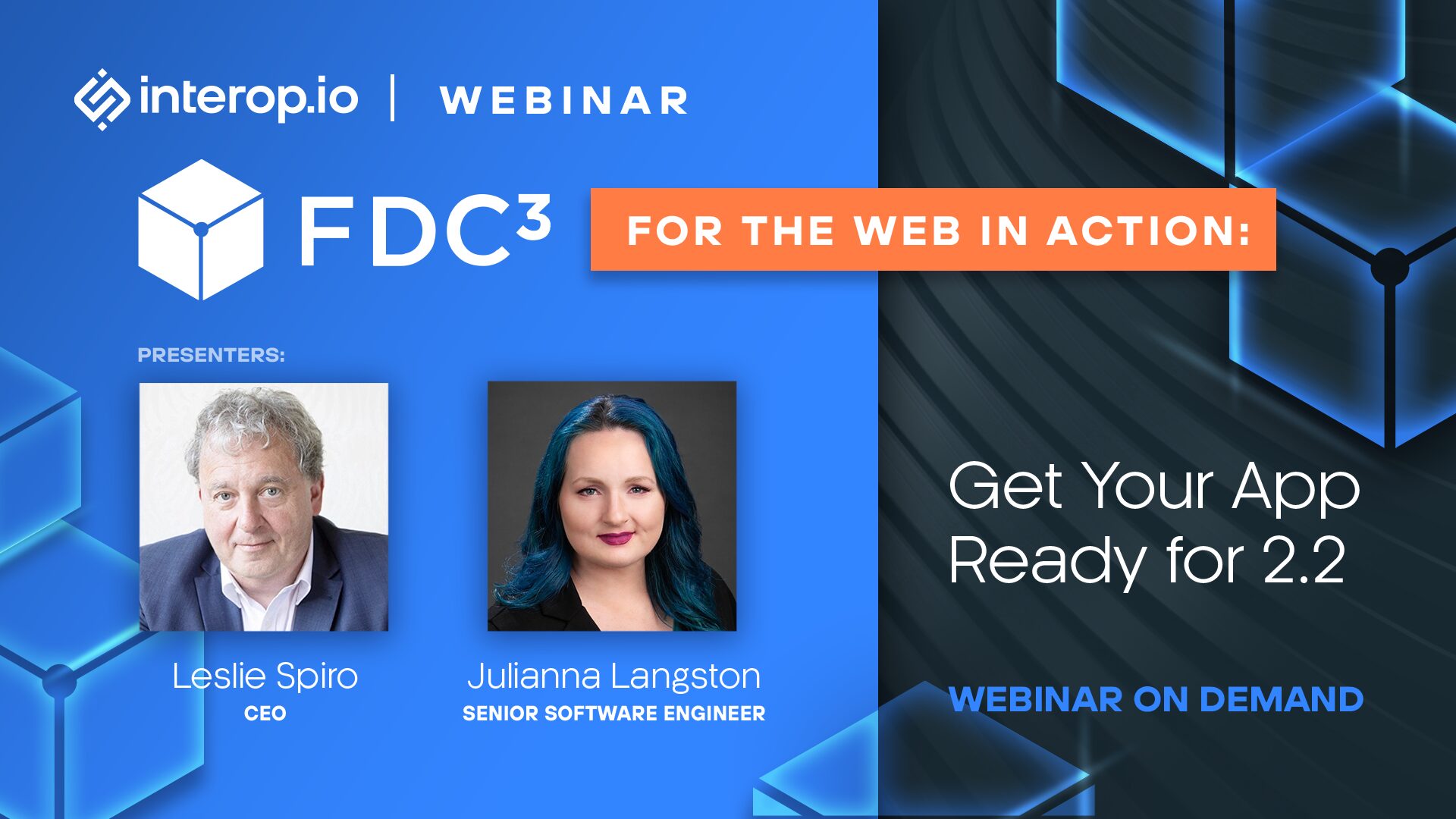
FDC3 2.2 brings interoperability to the web
FDC3 2.2 expands the standard beyond the desktop, enabling seamless app-to-app communication across web environments. With a true “write once, run anywhere” approach, teams can deliver interoperability without containers, extensions, or workarounds. In this webinar, see how to FDC3-enable your web apps, test interoperability, and get started quickly.
Watch FDC3 2.2 WebinarFDC3 2.0 established the foundation for interoperability
FDC3 2.0 marked a major milestone in standardizing how financial applications share context and trigger actions across desktops. Driven by the FDC3 community, it introduced key updates like App Directory (AppD) and API transactions—capabilities that continue to power modern interoperable workflows today.
Read more about FDC3 2.0
FDC3 Desktop Agent API
The FDC3 Desktop Agent API defines how applications interact with a desktop agent to share context and trigger actions. It provides a standardized interface that developers can use to enable interoperability across both in-house and vendor applications.
By implementing the FDC3 API, applications can communicate using a common language—ensuring consistent behavior across platforms and workflows without custom integrations.
AI-driven workflows can also leverage FDC3 to share context between applications and assistants, helping embed AI into real user workflows rather than isolating it in separate tools.
interop.io provides solutions engineering support to help teams integrate FDC3 and design interoperable workflows that work in real production environments.
The landscape of application interconnectivity is evolving right before our eyes. In the background, is FDC3.

Advanced workflows with FDC3 and interop.io
FDC3 enables applications to share context and trigger actions—powering synchronized views and launching apps with the right data.
But real-world workflows like RFQs, trade breaks, and pre-trade analysis require coordination across multiple apps, steps, and state over time. FDC3 provides the foundation, but extending beyond the standard is essential to support these scenarios in practice.
Explore additional FDC3 use cases in financial services from the FINOS community to see how these patterns are applied across financial services.

Discover the easiest way to get started with FDC3 using the Developer Sandbox. This free tool will get your app up and running in no time, ready to interoperate with other FDC3-enabled apps within the io.Connect Desktop Agent.
Get Started!Bridging the Gap: FDC3 Across Hybrid Environments

interop.io is a FINOS Gold Member
Learn more about the benefits of our FINOS Gold Membership, including access to an extensive training programs, certification opportunities, and software conformance benefits. These resources ensures that the interop.io team remains at the forefront of innovations and industry best practices, particularly around FDC3 Standards.
Learn more